Speech Therapy at Home: 7 Things You Can Do Today
You do not need training or special toys to help your child talk. Here are seven simple, powerful habits you can start this very afternoon, woven into ordinary family life, that genuinely build your child’s language.
If your child is slow to talk, you have probably wished someone would just tell you plainly: what can I actually do, today, at home? Not vague advice, not expensive apps or programmes, just real, practical, everyday things that genuinely work. That is exactly what this guide is, seven simple habits that genuinely build language, drawn directly from what speech therapists actually coach parents to do in real practice.
I am Priyanka Singh, an RCI registered speech therapist and special educator in Varanasi. These habits are the heart of what I coach parents to do, because the truth is that your everyday interaction is the most powerful language tool your child has. Sessions with a therapist help, but the hours with you are where language truly grows. Let me show you how to use them.
1. Narrate your day in simple words
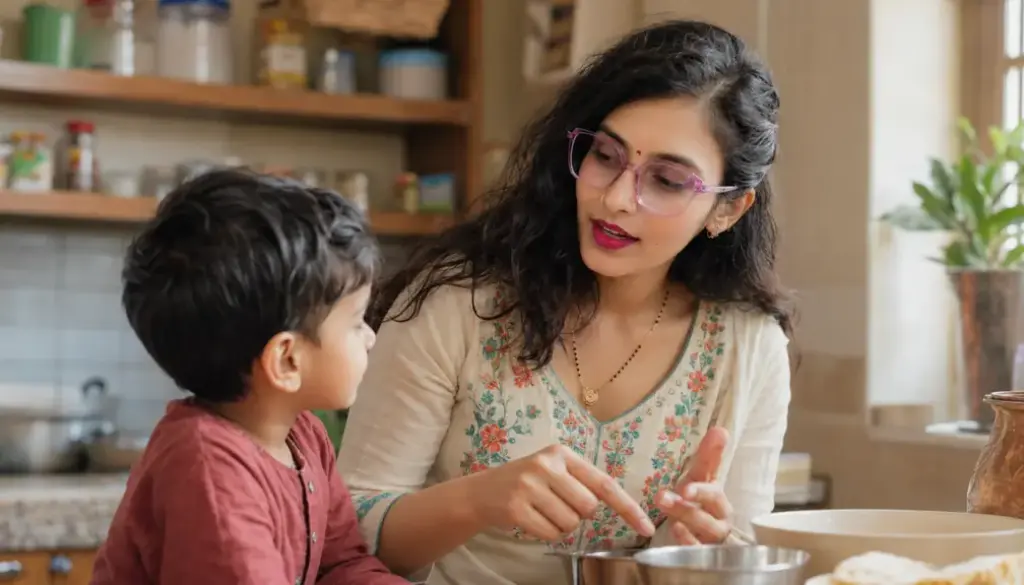
The first habit is the simplest: talk about what you and your child are doing, as you do it, in short and simple words. Making roti? Say it: “Roti. Rolling. Round roti.” Washing hands? “Water. Soap. Wash, wash. All clean.” You are giving your child a running commentary on their world, in words sized for them to catch.
This works because children learn words that are connected to what they are seeing and doing right now. When the word arrives at the same moment as the thing, the connection forms naturally. You do not need special vocabulary sessions. Your kitchen, your bathroom, your street, all become language lessons, simply because you are narrating them. It costs nothing and fits into everything you already do.
2. Follow their interest, then name it
Watch what your child is looking at or playing with, and talk about that, rather than trying to pull their attention to something you choose. If they are fascinated by the cow outside, that is the moment for “cow”, not for the flashcard you had planned. Their attention is already there; you simply add the words.
This matters because children learn words best for things they are already interested in. Language sticks to attention. When you follow their focus and name it, you are working with their brain rather than against it, and every word lands on fertile ground. It also makes talking together joyful rather than a struggle for their attention.
3. Pause, and wait expectantly
This habit is small but mighty, and most parents have never been told it: after you say something, or when your child wants something, pause. Wait. Look at them expectantly, with warmth, and count silently to five or even ten. Give them room to communicate, in whatever way they can.
We adults tend to fill every silence, answering our own questions, handing over the toy before the child has had to ask, talking over the gap. But it is in that gap that your child gets their chance to try. The pause is where communication happens. A child who is always anticipated never needs to communicate, while a child given warm, expectant space will begin to fill it, first with sounds and gestures, then with words.
4. Respond warmly to every attempt
When your child communicates in any way, a sound, a gesture, a look, an attempted word, respond, warmly and immediately. If they point at the fan and say “fuh”, light up: “Yes! Fan! The fan is spinning!” Every attempt that gets a warm response teaches your child the most important lesson in language: communicating works.
This is the engine of all language development: the loop where the child tries, the world responds, and the child is encouraged to try again. Never mind that the word was unclear or incomplete. Respond to the attempt as if it succeeded, model the correct word back naturally, and move on. A child whose attempts are celebrated will attempt more and more, and that practice is exactly how speech grows.
5. Expand on what they say
When your child does use words, take what they say and gently add one step more. They say “car”, you say “yes, red car!” They say “dog run”, you say “yes, the dog is running fast!” You are showing them the next rung of the ladder, using their own sentence as the starting point.
This technique, which therapists call expansion, is one of the most effective language-building tools there is, precisely because it meets the child exactly where they are. You are not teaching from a curriculum; you are growing their own utterance by one natural step. Done warmly and consistently, it steadily stretches your child’s sentences without a moment of pressure or drill.
6. Read together every single day
If you do only one thing from this list, make it this: share picture books with your child every day. Not as a lesson, but as a warm ritual, cuddled up, unhurried, talking about the pictures as much as reading the words. Point at things, name them, wonder aloud, let your child turn the pages and linger where they want.
Books concentrate language wonderfully: new words, repeated structures, things to point at and name together, all wrapped in closeness and attention. Children who are read to daily hear a richness of language that everyday talk alone cannot provide. And you do not need many books or expensive ones. A few favourites, read again and again, work beautifully, repetition is how children learn, and beloved books are never boring to them.
7. Trade some screen time for talk time
The final habit is a gentle trade: reduce passive screen time, especially for very young children, and fill some of that space with talking, playing, and reading together. Not because screens are evil, but because language grows through back-and-forth interaction with people, which is precisely what a screen cannot provide.
Start small and realistic: a screen-free mealtime used for conversation, a story before bed instead of a video, narrating the cooking rather than switching on a show. When screens are used, watch together when you can, and talk about what you see. The goal is not a screen-free house, but a better balance, one where the interaction your child needs is protected and plentiful.
Making it stick: little and often
Seven habits can feel like a lot, so here is the reassuring truth: you do not need to do them perfectly or all at once. Pick one or two and begin. Weave them into what you already do, the cooking, the bathing, the walking, so they cost no extra time, only a little intention. Little and often, woven through ordinary days, beats any formal practice session.
And keep it joyful, always. The moment helping your child talk becomes tense or pressured, its power drains away. Children learn language when they are relaxed, connected, and enjoying themselves with people they love. Your warmth is not a nice extra on top of these techniques, it is the very thing that makes them work.
When home help is not enough
These habits genuinely build language, and for many children who are simply a little slow to talk, they provide exactly the boost needed. But I must be honest with you: home strategies alone are not always enough. If your child shows the signs of a genuine delay, home habits work best alongside professional support, not instead of it.
So do both. Begin these habits today, and if your child has very few words for their age, seems not to understand well, uses few gestures, has lost skills, or your instinct keeps nagging, seek a professional view as well. The combination of warm home support and targeted professional help, each strengthening the other, is what serves a child with a real delay best. And the home habits you build now will make any therapy far more effective.
A sample day, woven with language
To make all of this concrete, let me paint a quick picture of what these habits look like woven through an ordinary day, because seeing them in place shows how naturally they fit. No schedules, no sessions, just intention added to the life you already live.
Morning: while dressing your child, you narrate simply, “Shirt. Arms up! Blue shirt on.” At breakfast, the screen stays off, and when your child points at the banana, you pause a beat to let them try a sound before responding warmly, “Banana! Yes, banana!” Midday: walking to the shop, you follow their gaze, “Auto! Big auto. Beep beep!” When they say “auto go”, you expand, “Yes, the auto is going fast!” Evening: a shared story before bed, unhurried, pointing and naming and lingering on their favourite page. That is it. That is the whole method, hidden inside a completely normal day, costing you nothing but a little added intention.
Do this most days, imperfectly and warmly, and you will have given your child hours of rich, responsive language exposure every single week, without one formal lesson. This is exactly what I mean when I say your everyday life is the most powerful therapy room there is, and you are already standing right in the middle of it, every single day, with everything you need.
This article is part of my complete guide to speech delay. You may also find the truth about screen time and speech helpful.
Want guidance made for your specific child? Let’s talk, gently and for free.
Book your free consultationCall 9196430300Frequently asked questions
How can I do speech therapy at home?
Through warm everyday habits: narrate your day in simple words, follow your child’s interest and name it, pause to give them room to communicate, respond warmly to every attempt, expand on what they say, read together daily, and trade some screen time for talk time. Little and often, kept joyful, is the key.
What is the most effective thing I can do at home?
Daily shared book reading is perhaps the single most valuable habit, combining rich language with closeness and attention. Alongside it, the pause-and-wait habit, giving your child room to communicate instead of anticipating their every need, is small but remarkably powerful.
Should I correct my child’s speech mistakes?
Not directly. Never make your child repeat words until they say them right, as this creates anxiety and reduces talking. Instead, model the correct word warmly, they say “fuh”, you say “yes, fan!”, and carry on. Modelling teaches effectively; pressure backfires.
Are home strategies enough, or does my child need therapy?
For children simply a little slow to talk, rich home interaction often provides the needed boost. But if your child has very few words for their age, limited understanding, few gestures, lost skills, or your instinct persists, seek a professional view too. Home habits work best alongside professional support, not instead of it.
How much time do these habits take?
Almost none beyond intention, because they weave into what you already do: cooking, bathing, walking, mealtimes. Narrating, pausing, responding, and expanding happen inside ordinary life. A daily story takes minutes. Little and often, woven through your normal day, is exactly how they work best.