Just Got an Autism Diagnosis? Read This First
If you have just heard the word autism about your child, take a breath. Whatever you are feeling is allowed. Here are the gentle, honest first steps, and permission to feel exactly what you feel.
Perhaps it was today. Perhaps it was a few days ago. Someone said the word autism about your child, and the world tilted. You may be numb, or in tears, or strangely calm, or all of these within an hour. However you are, I want you to know: you are not alone, and you do not have to have it all figured out right now.
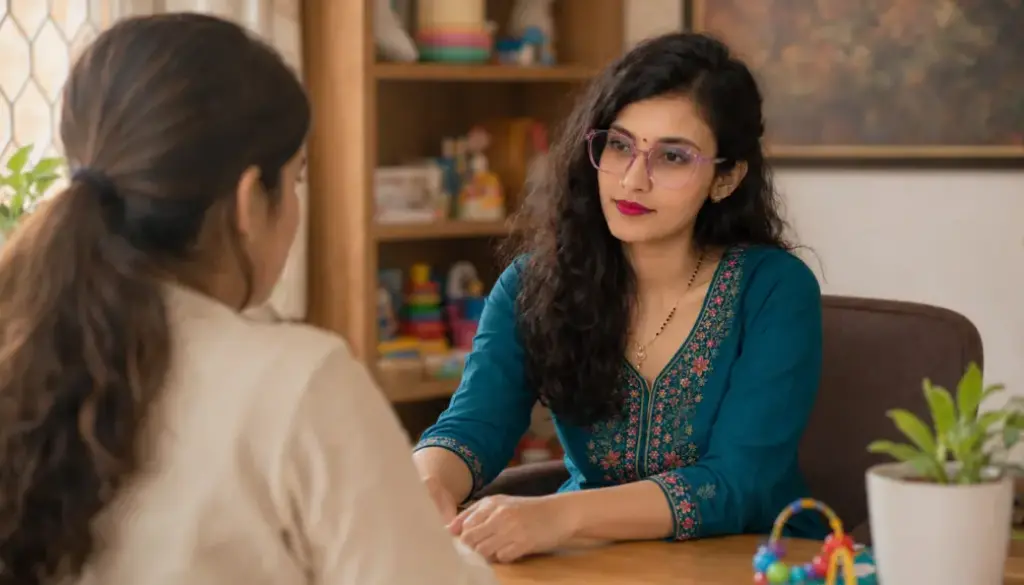
I am Priyanka Singh, an RCI registered speech therapist and special educator in Varanasi. I have sat with many parents in the very first days after a diagnosis, and I have learned that what a parent needs then is not a mountain of information, but a little honesty, a little comfort, and a few gentle first steps. So let me offer those.
First, whatever you feel is allowed
There is no correct way to feel right now, and anyone who suggests otherwise is not being honest with you. In these early days, parents feel all kinds of things, often several at once, and every one of them is normal and human.
- Grief, for the future you had imagined for your child
- Relief, that someone finally believes you and there is a name for it
- Guilt, though you did absolutely nothing to cause this
- Fear, about what the future holds
- Numbness, as your mind protects you from too much at once
- Anger, at the situation, at professionals, at the unfairness
- Even, in quiet moments, a wish that this were not your life
None of that makes you a bad parent. It makes you a human being who loves their child and is processing something big. Please do not add guilt about your feelings on top of everything else. Feel what you feel. It will shift and settle in time, I promise you that from having watched it happen for so many families.
Your child is exactly the same person
Here is the truth I most want you to hold on to in these early days. Your child is exactly the same person today that they were the day before the diagnosis. Nothing about them has changed. The same laugh, the same little habits, the same funny quirks, the same moments of connection, all of it still exactly there.
What has changed is only this: you now have a word, and with it, understanding, and a door to the right help. The diagnosis did not give your child autism. It gave you a key. That is genuinely a gift, even though today it may feel like the opposite.
Step back from the internet
I say this gently but firmly, because it matters. In the first days after a diagnosis, almost every parent does the same thing: they search the internet late at night. And the internet will terrify you. The worst-case stories are the loudest. The most frightening predictions get the most clicks.
What you will not easily find online are the thousands upon thousands of autistic children and adults living full, connected, joyful lives, because they are busy living those lives, not writing alarming forum posts at midnight. The picture you get from panicked searching is dangerously skewed toward the worst.
Do not try to do everything at once
Once the initial shock settles, many parents swing to the opposite extreme: a frantic urge to try everything immediately, every therapy, every diet, every intervention they have read about, all at once, right now. This comes from love and from fear, and it is completely understandable. But please, slow down.
Desperate, loving parents are exactly who unscrupulous people target with expensive miracle cures. Slow, steady, qualified support achieves far more than a frantic scattershot of everything. You do not have to fix this by next week. You have time to make calm, considered choices.
- Let yourself absorb the news before making big decisions
- Seek one or two qualified, RCI registered professionals rather than trying everything
- Focus first on communication and connection, which help almost everything else
- Be deeply sceptical of anyone promising a cure or guaranteed results
- Begin simple, warm support at home, which you can do straight away
Find one person who understands
Not everyone in your life will understand, and that can be painful. Some relatives will say unhelpful or even hurtful things. Some will deny anything is different. Some will offer unwanted advice. You do not owe anyone a debate about your child, and you are allowed to protect yourself from conversations that drain you.
What helps enormously is finding even one person who truly gets it, another parent on a similar path, a supportive friend, a professional who listens. That one connection can make the difference between feeling utterly alone and feeling held. Seek it out when you are ready.
Simple things you can do now
When you feel ready, and only then, here are gentle, pressure-free things that genuinely help, and that you can begin at home without any special training.
- Follow your child’s lead in play, joining their world rather than pulling them into yours
- Respond warmly to every attempt they make to communicate, however small
- Keep language simple and give plenty of time for a response
- Build gentle, predictable routines that help your child feel safe
- Notice and treasure the moments of connection you already have
None of this is about fixing your child. It is about meeting them where they are, with love, and gently building from there. That is what good early support looks like, and you are already capable of beginning it.
A note for the days ahead
The early days are the hardest. I promise you they soften. Parents who felt hollow with grief in the first week find, in time, that life fills again with laughter, hope, and pride in their child’s progress and their child’s particular joys. The fear you feel now is not the shape of your whole future.
Your child is still your child. They still need exactly what they needed yesterday: your love, your patience, and your belief in them. You already have all of that. Everything else, you can learn, one calm step at a time. And you do not have to take those steps alone.
How to tell family and friends
One question that weighs on many parents in the early days is how, and whether, to tell other people. There is no single right answer, and you are under no obligation to tell anyone before you are ready. But since it comes up for almost every family, here are some honest thoughts.
You get to decide who to tell, when, and how much. Some parents find it a relief to share and be supported. Others prefer to hold it close while they process. Both are completely valid. You do not owe anyone an announcement, and you do not have to justify your choice either way.
When you do tell people, keep it simple and lead the tone yourself. You might say something like: our child is autistic, which means their brain works a little differently, and we are getting the right support. You do not have to educate everyone, defend the diagnosis, or manage other people’s reactions. If someone responds unhelpfully, that is about their limitations, not your child.
Telling your other children
If you have other children, they will sense that something is happening, and simple honesty usually serves them best. Explain in age-appropriate words that their sibling’s brain works a little differently, that it is nobody’s fault, and that they are loved just the same. Children generally cope far better with gentle truth than with a mystery they can feel but not understand.
You will find your feet
I want to end by speaking to you as someone who has walked alongside many families from this exact starting point. The overwhelm you feel now is real, but it is temporary. Parents who arrive at a diagnosis feeling lost almost always, in time, find their footing. They learn their child deeply. They find what helps. They rediscover joy, and pride, and hope.
You will come to know your child not as a diagnosis but as the whole, particular, wonderful person they are, with their own delights and strengths and ways of showing love. The word autism will become just one part of a much bigger and richer picture. Give yourself time, be gentle with yourself, and take it one day at a time. You are going to be okay, and so is your child.
And please remember, in the middle of everything, to look after yourself too. You cannot pour from an empty cup. Rest when you can. Eat something. Accept help when it is offered. Let yourself cry if you need to, and laugh when you can. Caring for yourself is not a luxury or a distraction from caring for your child. It is part of it, because your child needs you steady and present, not depleted and running on empty. You matter too, and taking care of yourself is one of the most important things you can do for your whole family.
This article is part of my complete parent’s guide to autism. You may also find how autism is diagnosed in India helpful.
Just had a diagnosis and not sure what is next? Let’s talk, gently and for free.
Book your free consultationCall 9196430300Frequently asked questions
Is it normal to grieve after an autism diagnosis?
Yes, completely. Many parents grieve the future they had imagined, and this does not mean they love their child any less. Grief and love coexist. Please do not add guilt about your feelings, whatever you feel in these early days is normal and human.
Did I cause my child’s autism?
No. Autism is neurodevelopmental and begins before birth. Nothing you did caused it, not your parenting, your diet, screen time, or anything else. Please set that guilt down. It is not yours to carry.
What is the first thing I should do after a diagnosis?
Let yourself absorb the news before making big decisions. Then, when ready, seek one or two qualified, RCI registered professionals, focus first on communication and connection, and begin gentle support at home. Do not try to do everything at once.
Should I try every therapy I read about?
No. Slow, steady, qualified support achieves far more than a frantic attempt at everything at once. Be especially cautious of anyone promising a cure. Take calm, considered steps rather than rushing, and be sceptical of miracle claims that target frightened parents.
Will my child be okay?
Autistic children grow, learn, and change enormously, and go on to live full, connected lives in their own way. The frightening picture the internet paints is skewed toward the worst. With early, loving support, there is real and genuine reason for hope.